

Table of Contents
Journey to the Heart of Winter Wonder
Snow monkeys were next on our agenda after a few action-packed days in Tokyo. Next stop? Jigokudani Monkey Park in Nagano. It’s a place we’d always wanted to visit—famous for its hot spring-loving monkeys. Quite a change of scenery from the busy Tokyo streets we’d just left.
We decided to skip the guided tours, wanting to take things at our own pace. The plan was simple: hang out at the park for as long as we felt like it. If we didn’t spot any monkeys, no sweat. We’d just head over to the nearby onsens of Yudanaka or Shibu Onsen and spend the night. Then we could return the next day for another shot at seeing the monkeys. Either way, we were excited to soak in Nagano’s beautiful landscapes and unique wildlife.
Speedy Day Trip to Nagano
The trip from Tokyo to the park was a bit of a trek, but thanks to Japan’s efficient rail system, we managed to get there in under three hours. This made it doable as a day trip from Tokyo. Our journey to the park was a two-part affair, starting at Tokyo Station. From there, we hopped on the Hokuriku Shinkansen, which runs from Tokyo to Kanazawa, stopping at Nagano Station along the way. This line also stops at several other stations like Ueno, Omiya, Takasaki, Karuizawa, Iiyama, Toyama, Kanazawa, Fukui and more, depending on which service you choose.
We decided on the Kagayaki service, which got us to Nagano Station in just an hour and a half. Other options included the Hakutaka or Asama services, but the Kagayaki was the best fit for us. Just a heads up though, it’s a reservation-only service, so you need to book a seat in advance. The one-way fare set us back at about JPY8,500.
All services on this line are covered by the Japan Rail (JR) Pass, JR East Pass, and JR Hokuriku Arch Pass. But since our main goal was to see the Snow Monkeys, we found it was cheaper to just buy a direct ticket to Nagano instead of getting a JR Pass. If you’re planning to visit other attractions outside of Tokyo, the JR services might be a more cost-effective option.
From Nagano to Snow Monkeys
Once we got to Nagano Station, the fastest way to the park was to hop on the Nagaden Express Bus, which took about 45-50 minutes. We headed to bus stop number 23 from the east exit, where buses leave regularly. The bus ticket was 1800 yen. Just a note, if you have a Japan Rail Pass, it won’t cover this part of the trip, according to snowmonkeyresorts.com.
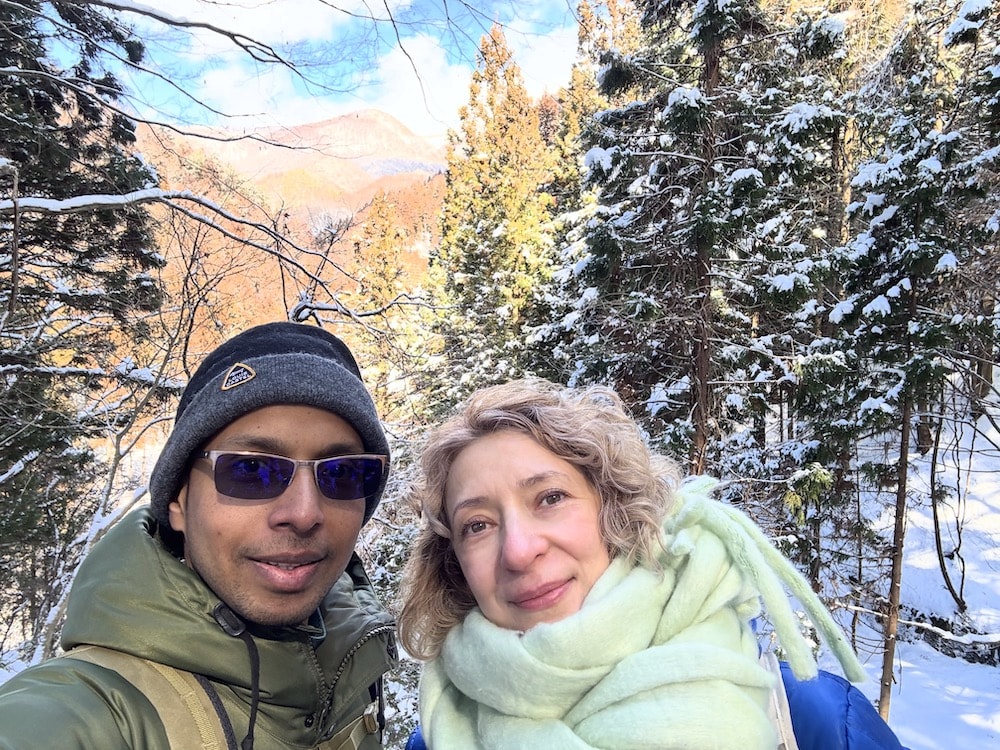
The bus dropped us off at the Snow Monkey Park bus stop, which is right by the Roman Museum’s car park. From there, it was a short stroll to the Monkey Park gift shop and the entrance to the forest trail that leads to the snow monkeys.
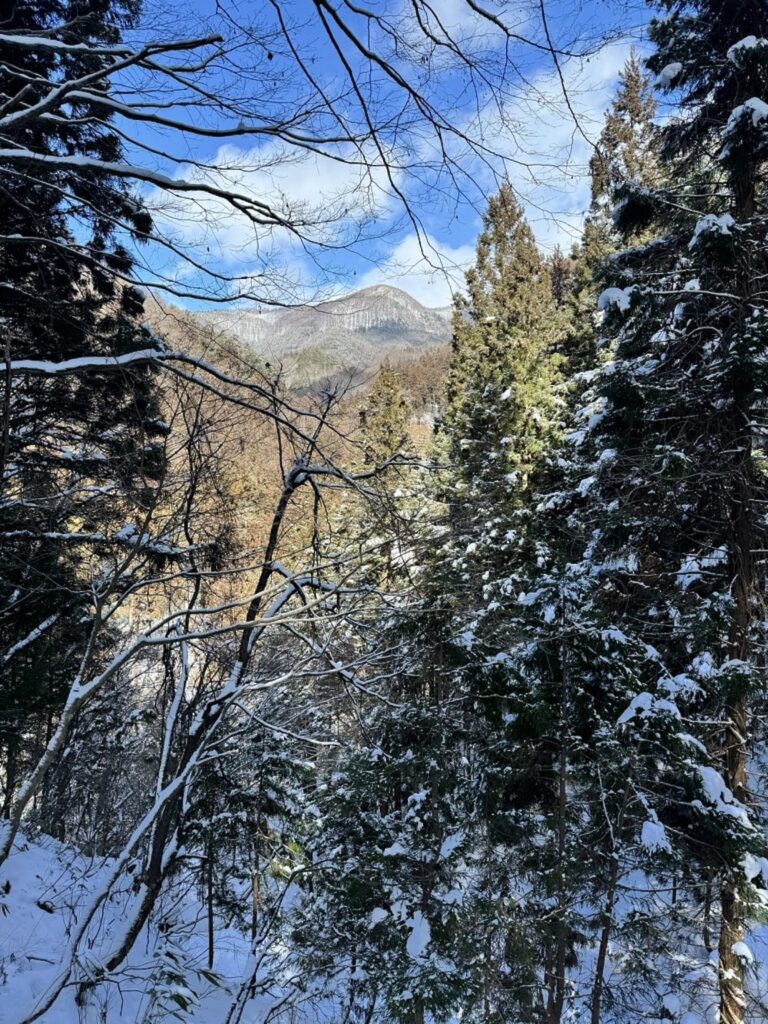
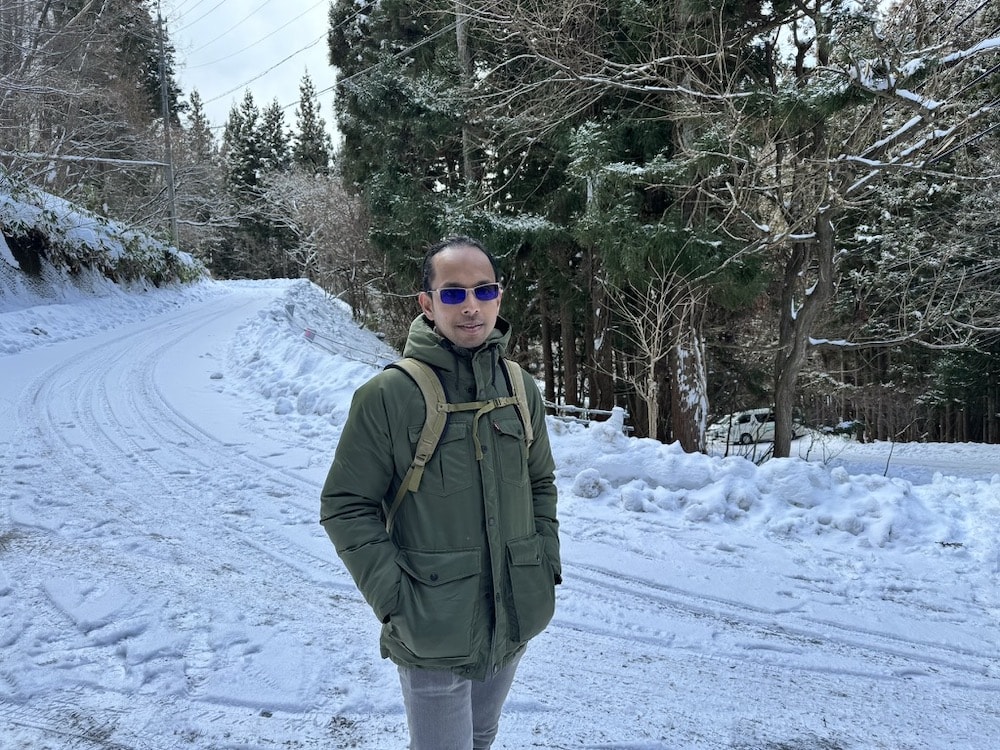
The trail through the stunning pine forest to the ticket office and the monkeys’ onsen area is about 2 km long and takes roughly 30 minutes to walk. There are a few stairs, but the path is mostly flat with a slight incline. Make sure to dress warmly and wear sturdy walking shoes because the path can get slippery, especially if it’s icy or when the snow starts to melt.
Discover Jigokudani: Home of the Snow Monkeys
The enchanting Snow Monkey Park, nestled at the base of Joshinetsu Kogen National Park, is a year-round sanctuary for a unique troop of Japanese Macaques. Officially known as the Jigokudani Monkey Park, it’s more commonly referred to as the Snow Monkey Park, a nod to its most famous inhabitants.
The park’s name, Jigokudani, translates to “Hell’s Valley,” a nod to the volcanic geothermal steam that permeates the area. Established in 1964, the park provided a haven for the macaques after their natural habitat was disrupted by the creation of ski resorts. This led to the monkeys venturing into nearby towns, where they were unfortunately seen as pests.
Tickets to this magical place can only be bought on the day of your visit, with the ticket office located at the end of a picturesque forest walk. Be prepared for a bit of a wait, as lines can form from mid-morning to early afternoon when the park is at its busiest.
As of February 2024, the entrance fee is 800 yen for adults and 400 yen for children.
You’ll find lockers conveniently located near the ticket office for your belongings, along with an information centre and restroom facilities
Please note, food is not allowed in the park to ensure the monkeys’ wild and free-roaming nature is preserved.
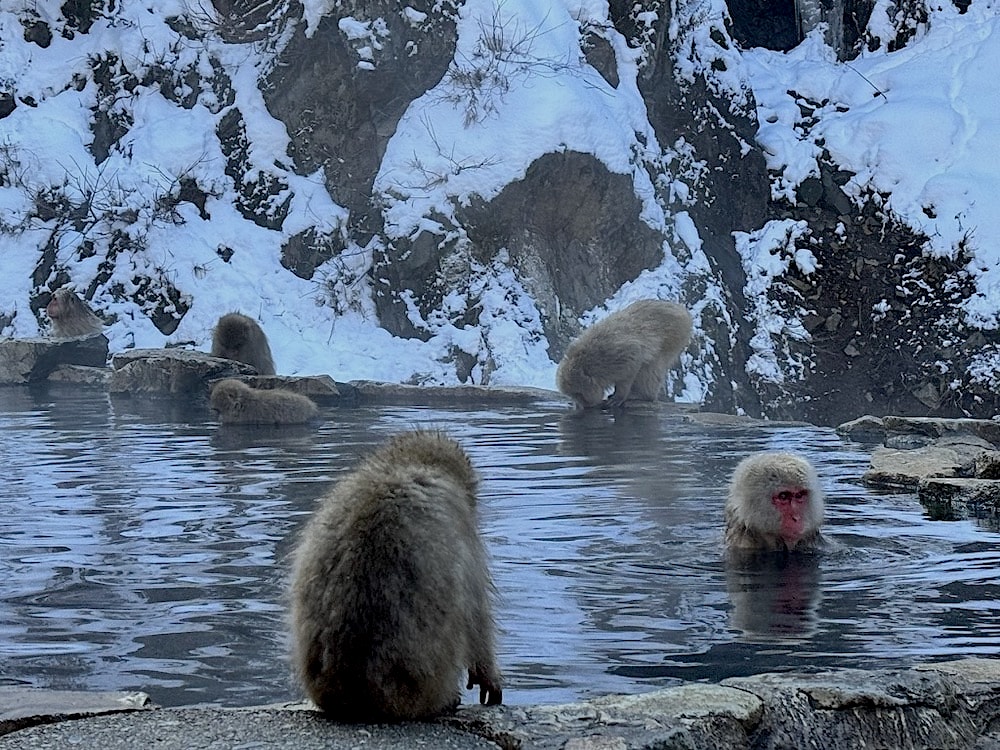
Once inside, the real magic begins. Make your way to the steaming onsen pool and watch the snow monkeys in their element – bathing, grooming, and frolicking in their natural habitat. They may be close and irresistibly fluffy, but remember, they are wild animals and should not be touched.
Capturing Moments: Snow Monkeys in Their Natural Habitat
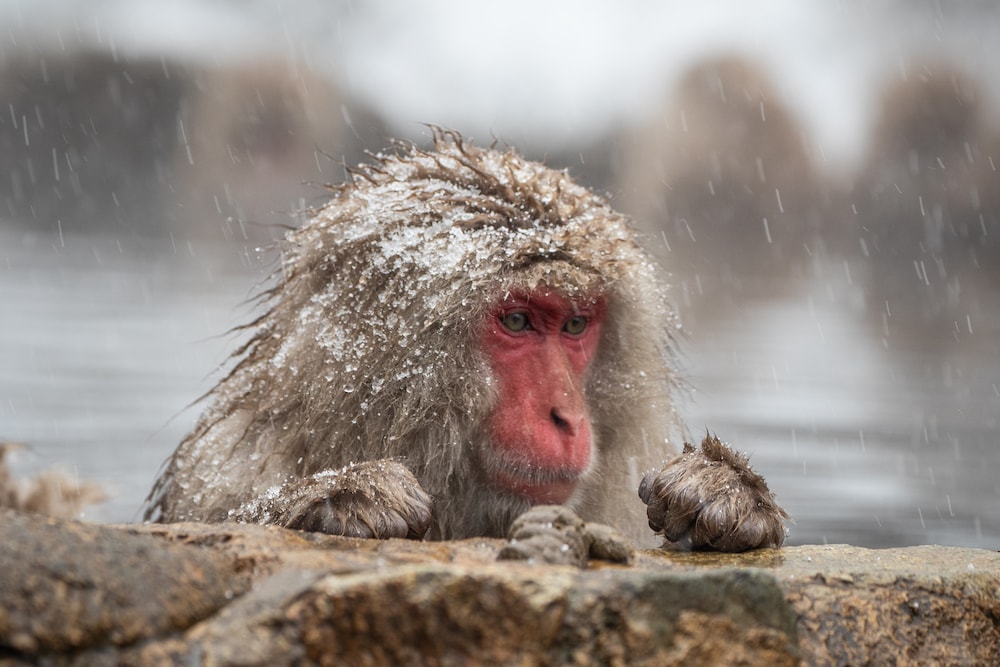
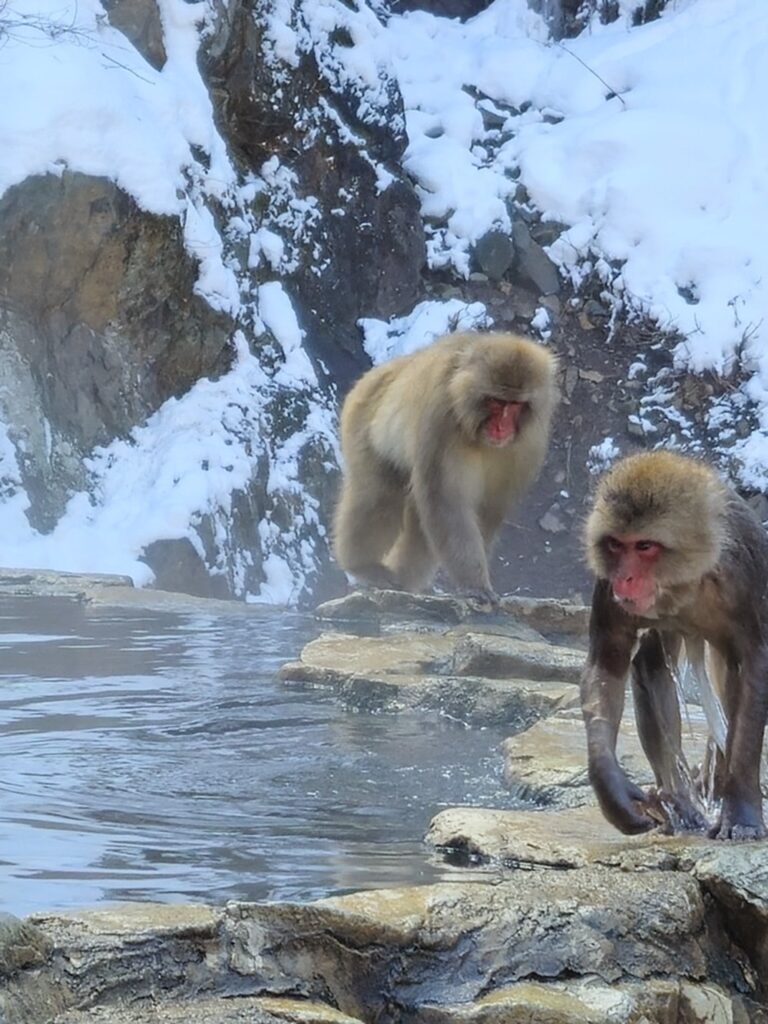
We were privileged to observe the monkeys as they descended from the mountains, drawn in by the inviting warmth of the onsen. Their playful antics and mutual grooming were fascinating to watch, offering us a glimpse into their social dynamics. Amidst this flurry of activity, we managed to capture some truly unique photos of monkeys, their fur adorned with snowflakes, a sight that surpassed our expectations.
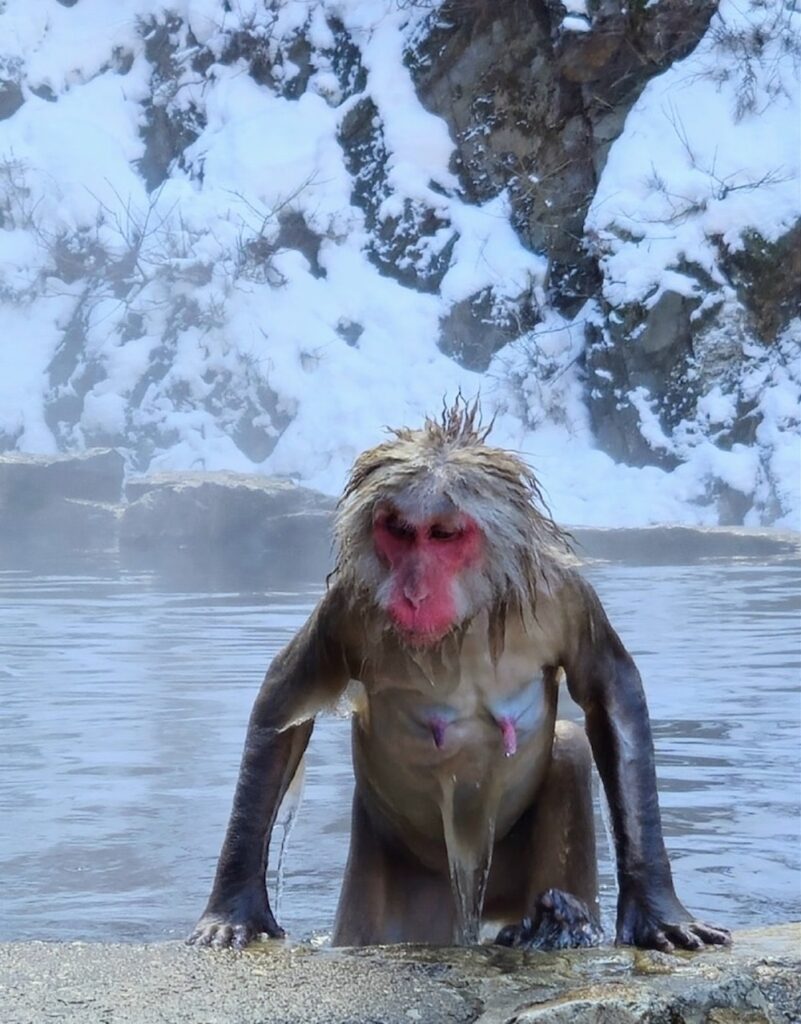
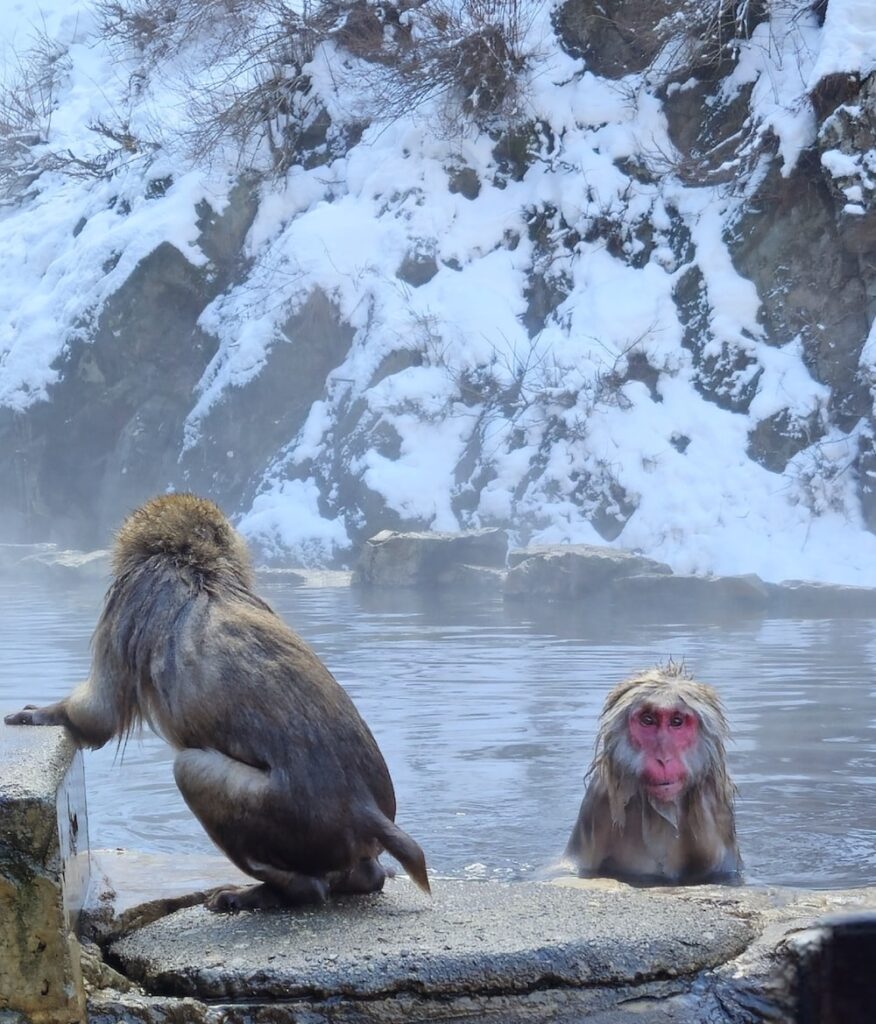
The scene that unfolded as we approached the steaming onsen was nothing short of remarkable. Monkeys of all ages were gathered around the warm waters, their communal bathing rituals a testament to their strong social bonds. From the playful young to the seasoned elders, all were partaking in this shared experience, their relaxed demeanour mirroring our own sense of contentment.
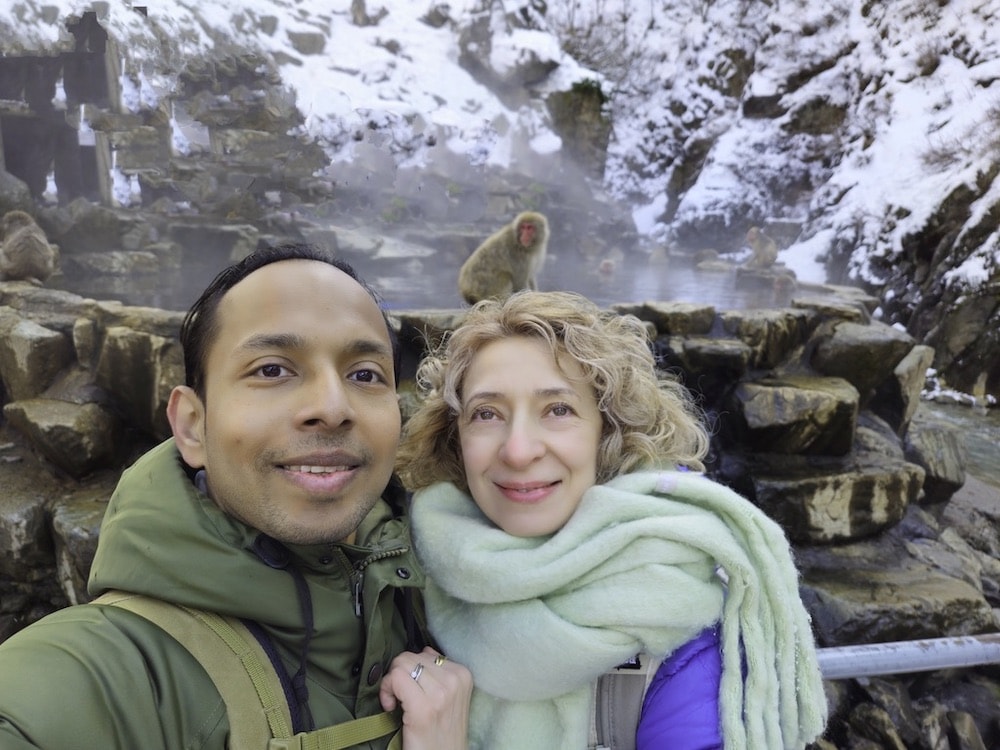
Observing these interactions was a powerful reminder of the beauty and simplicity of nature. The park, a successful conservation endeavour, not only safeguards these monkeys but also offers us a rare opportunity to witness their lives without the confines of cages or barriers.
Best Times to Visit: A Quiet Morning at Snow Monkey Park
The park is open throughout the year, but we chose to visit in February, the perfect time to see the monkeys frolicking in the snow. They tend to frequent the hot springs more often on frosty winter mornings. The park opens its gates at 9 am in winter, and we recommend arriving early to enjoy a serene experience before the crowds descend. We arrived at 10 am, and by noon, it was bustling with visitors.
Tips for Visitors
To make the most of your visit, aim for an early morning arrival to beat the crowds and catch the monkeys at their most active. Remember, this is their home; respect and discretion should guide your behaviour. Dress warmly, wear sturdy boots, and be prepared for slippery paths.
Conclusion
The park, with its steaming onsen and snow-covered landscapes, was a sight to behold in itself. But the real magic lay in the moments we shared with the monkeys – their fur dusted with snowflakes, their contentment as they bathed in the warm waters, and their fascinating interactions. These are memories we captured not just in photos, but in our hearts as well.
This trip underscored the importance of conservation efforts like the Jigokudani Monkey Park, which not only protects these incredible creatures but also allows us to gain a deeper understanding and appreciation of them.
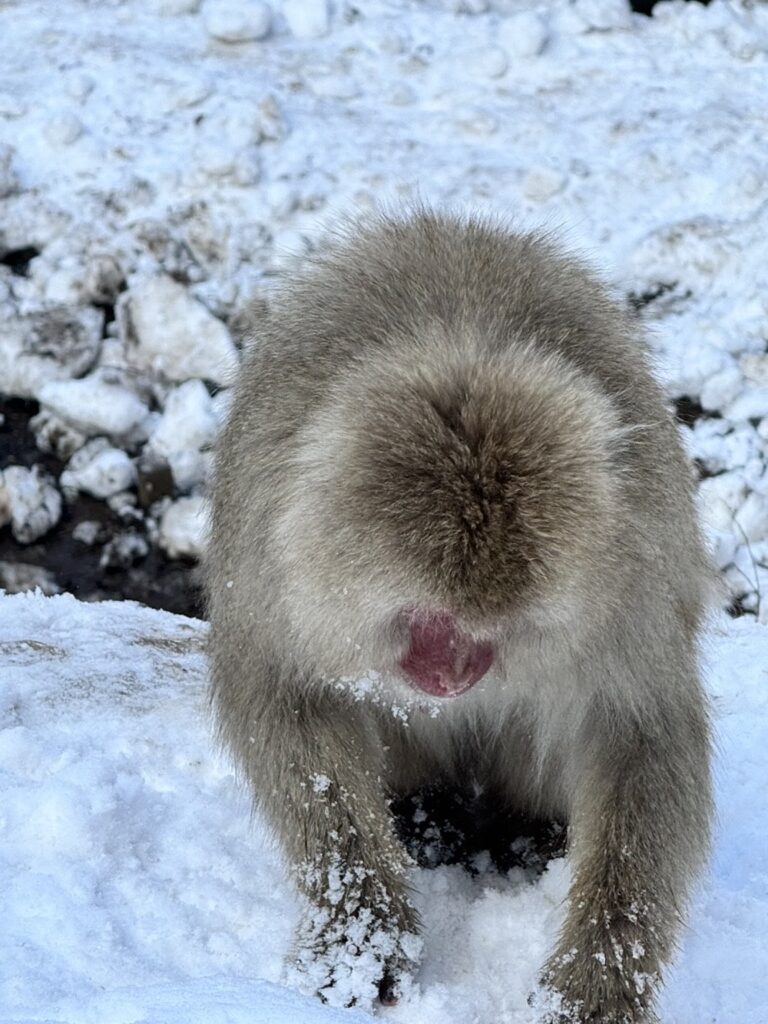
It was a poignant reminder of our responsibility to coexist with nature, respecting and preserving it for generations to come.
In the end, we left the park with more than just memories. We took with us a renewed sense of wonder, a deepened respect for nature, and a resolve to be more conscious of our role in preserving it. Our trip to the Snow Monkey Park was more than just a visit; it was a truly enriching experience that will stay with us for a lifetime.
Should You Visit?
A visit to Jigokudani Monkey Park is undoubtedly a unique and memorable experience, but it’s worth noting that the timing of your visit can significantly influence your experience. Arriving early in the morning is highly recommended, as it offers a quieter, more serene atmosphere, allowing you to fully immerse yourself in the experience without the distraction of larger crowds. Moreover, the weather plays a crucial role in shaping your encounter with the snow monkeys.
Colder temperatures increase the likelihood of the monkeys seeking refuge in the warm embrace of the onsen, providing an enchanting spectacle for visitors. If your heart is set on witnessing the captivating sight of monkeys frolicking in the snow, then plan your visit between late December and March. This period typically sees a generous dusting of snow in the park, creating a winter wonderland that perfectly complements the charm of the snow monkeys.
In essence, while the park is a year-round attraction, timing your visit strategically can enhance your experience, making it all the more unforgettable.
Also, read A Two-Day Adventure in Mongolia









0 Comments